By appointment only · No walk-ins · One party on the pond at a time
Honey HoleTrout Pond · Est. 2027 Reserve

Field guide

About trout

Everything worth knowing about the three trout in our pond: how to tell them apart, how they live and feed, how to release one so it swims away strong, and how to cook the ones you keep.

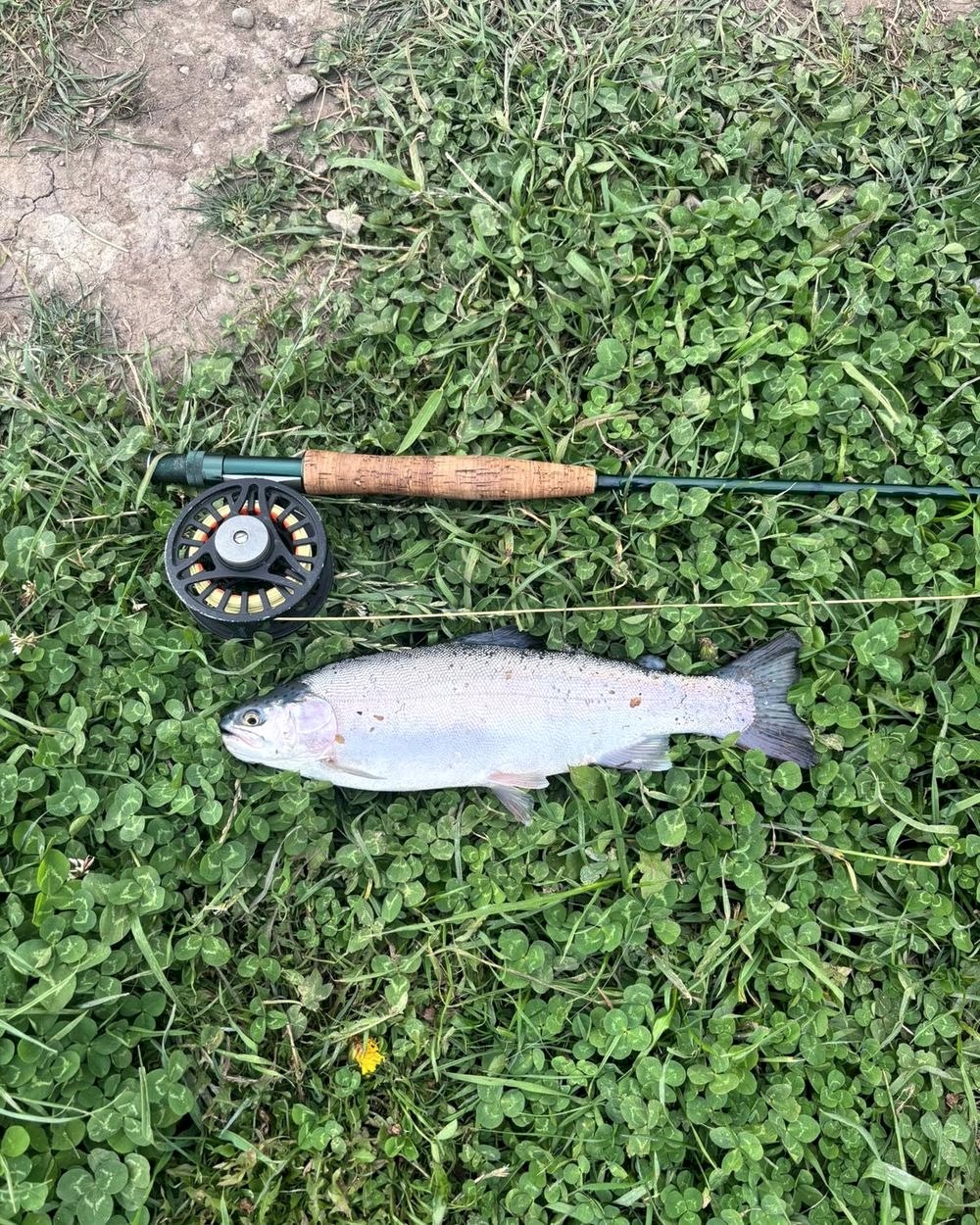
A rainbow trout on the grass beside a fly rod
Rainbow trout

Meet the fish

One pond, three species

All three share our pond. Here's how to recognise each one when it's in your net.

Rainbow trout

Oncorhynchus mykiss

The classic western trout, native to rivers draining to the Pacific. Rainbows are strong, fast fighters, and the most likely of the three to jump.

Look for
A pink to red band along the side, silver flanks, and small black spots across the back, the dorsal fin and the tail.
In our pond
The most plentiful of the three, and the biggest.
Spawns
Spring
Feeds on
Insects, freshwater shrimp, worms

Brook trout

Salvelinus fontinalis

Despite the name, a char rather than a true trout, native to eastern North America. Often called the prettiest freshwater fish in the country, and usually the easiest to catch.

Look for
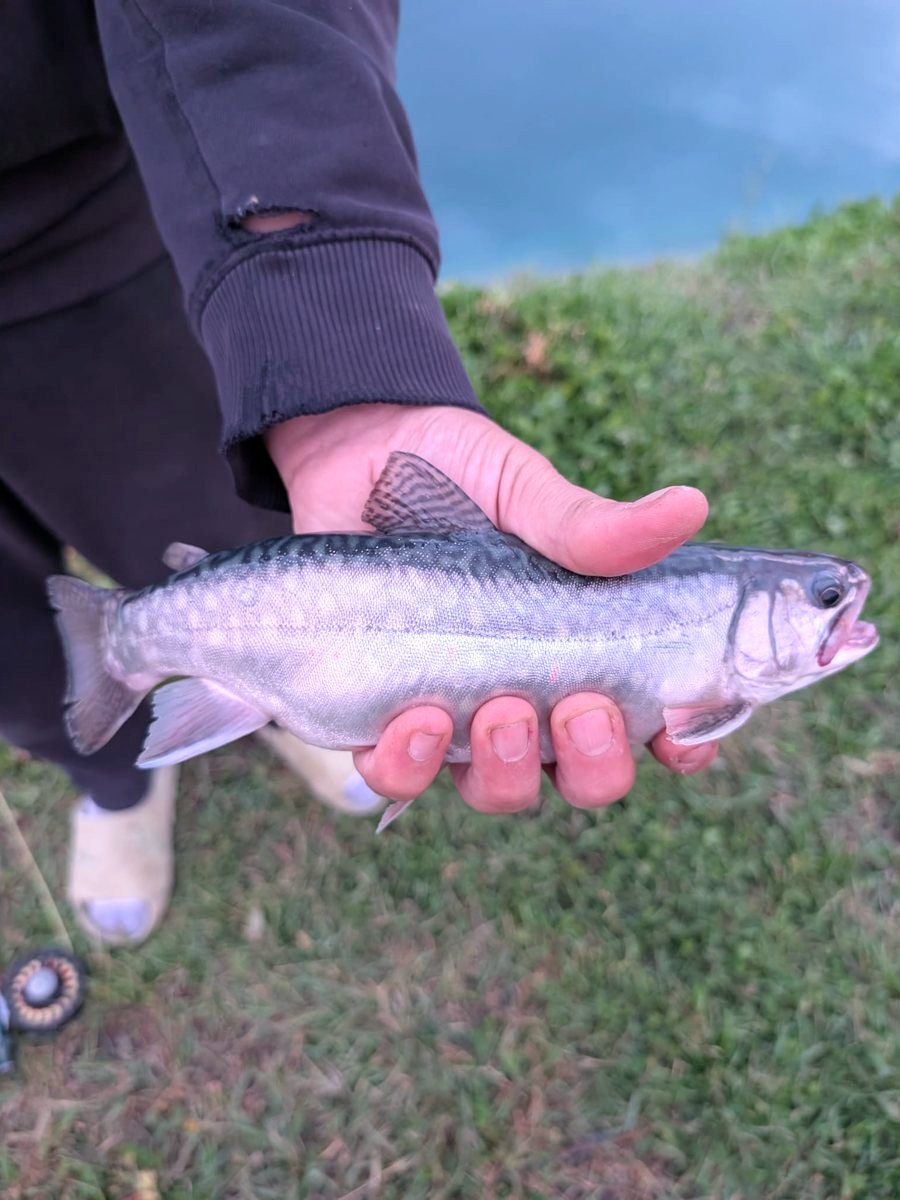
Pale, worm-like markings on a dark green back, pale spots and a few red spots with blue halos on the sides, and lower fins with a bright white front edge.
In our pond
Less common than the rainbows.
Spawns
Fall, when the males colour up orange and red
Feeds on
Insects, small crustaceans, worms

Tiger trout

Salmo trutta × Salvelinus fontinalis

A cross between a brown trout and a brook trout. Tigers are almost always sterile, rarely occur in the wild, and are raised in hatcheries for their fight and their appetite.

Look for
Bold, maze-like stripes over the whole body, like a tiger's coat, and no distinct round spots.
In our pond
The rarest of the three. Count yourself lucky.
Spawns
Doesn't reproduce
Feeds on
Insects, and more than the other two, small fish. The most aggressive biters in the pond.

A quick test

Trout or char?

Trout and char are close cousins in the salmon family. Anglers call them all "trout", but there's a simple way to tell them apart at the dock.

Dark spots on a light body: a true trout. Rainbows carry black spots on silver and olive.

Light spots on a dark body: a char. Brook trout carry pale spots and markings on dark olive-green.

The tiger trout breaks the rule because it's half of each. It trades spots for the maze pattern it gets from its brook trout parent.

A trout with pale spots and dark wavy back markings, held beside the pond
Light spots on a dark back

Biology

How trout live

They need cold, clean water. Trout are cold-water fish. They feed and grow best in cool water and slow down as it warms. In midsummer they drop to the deep, cooler water, which is why our pond is 20 feet at its deepest.

They hunt by sight. Trout feed mostly by watching for movement, which makes them most active in low light: early morning, evening and under cloud.

They feel the water. The line of small pores along each side, the lateral line, senses vibration and pressure. A heavy footstep on the dock can travel further than you'd think.

Their colour comes from food. The pink-orange of trout flesh comes from natural pigments in what they eat, especially freshwater shrimp and insects. Fish that forage well tend to have richer colour.

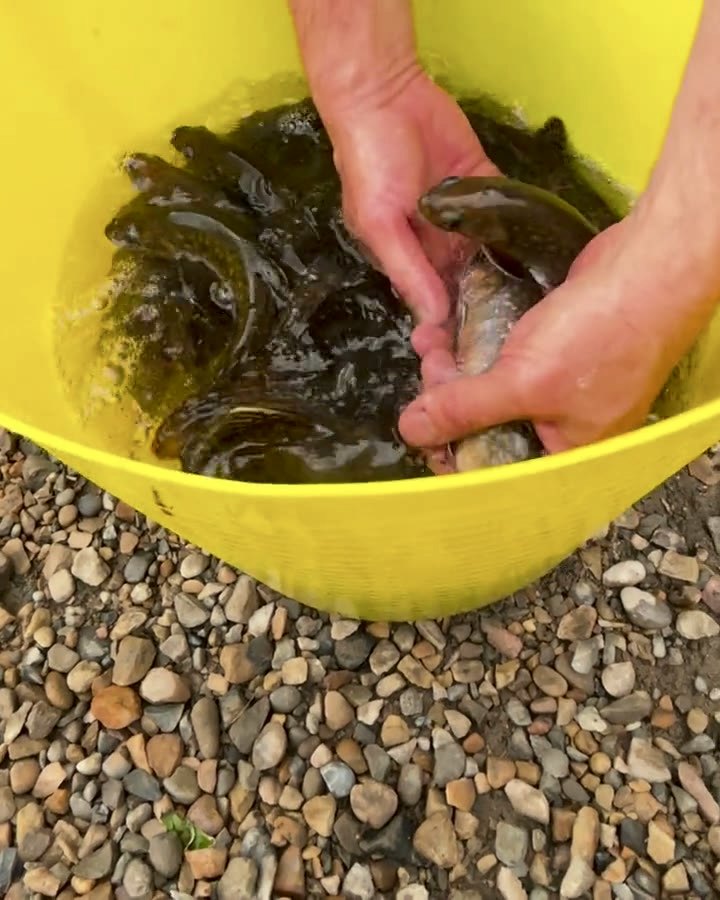
Hands lifting young trout from a bucket at stocking
Stocking day

Plan your visit

Through the season

What the fish are usually doing in each month we're open, and how to fish for them.

MonthWhat the fish are doingTry
MayFreshly stocked and hungry after ice-off. Cool water keeps them active all day.Worms or dough bait near the surface; small spinners
JuneStill cool and feeding hard. Insect hatches bring fish up in the evening.Any block; evenings for rising fish
JulyWarm afternoons push fish deeper. Mornings and evenings are best.Fish deeper; early and late blocks
AugustThe warmest water of the year. Fish hold deep and feed in short bursts.Let bait sink; the last block of the day
SeptemberCooling water wakes the fish up again. Brook trout start to colour for spawning.Any block; spoons for the tigers
OctoberCrisp, cold water and active, well-fed fish. Brook trout at their brightest.Midday blocks while it's warmest

Handle with care

Catch and release, done right

A trout you release should swim away strong. These habits make the difference.

  1. Use barbless circle hooks

    Circle hooks tend to catch the corner of the mouth instead of being swallowed, and barbless hooks come out cleanly. Ours are free in the gear locker.

  2. Bring it in quickly

    A long fight exhausts a fish. Land it promptly with a net, ideally a rubber one that's gentle on its slime coat.

  3. Wet your hands

    The slime coat protects a trout from infection. Dry hands and towels strip it off.

  4. Keep it in the water

    Unhook it in the net while it's still in the water. If you lift it for a photo, have it back within 10 seconds.

  5. Hands off the gills

    Never squeeze the belly or touch the gills. Support it gently under the belly.

  6. Let it swim away

    Hold it upright, facing into the water, until it kicks free. If the hook is swallowed, cut the line close rather than pulling it.

Warm water is harder on fish

Released trout recover less well in warm water. On hot summer afternoons, keep fights short and releases quick, or plan to keep what you catch.

From pond to plate

On the table

Dispatch it quickly. If you're keeping a fish, kill it right away with one or two firm blows from the priest to the top of the head, just behind the eyes. Then bleed it by cutting through the gills and put it straight on ice. Never leave a fish to suffocate in a bucket or put a live fish on ice.

Keep it cold. Get it on ice within minutes and keep it at 4°C or below until you cook it.

Cook it through. Trout is done at 70°C (158°F) in the thickest part, when the flesh flakes easily with a fork.

Eat the skin, if it's crisp. Trout scales are so small you don't need to remove them, and seared skin is the best part. Much of a trout's healthy fat, including its omega-3s, sits in and just under the skin.

Good for you. Trout is a lean, high-protein fish and a good source of omega-3 fats.

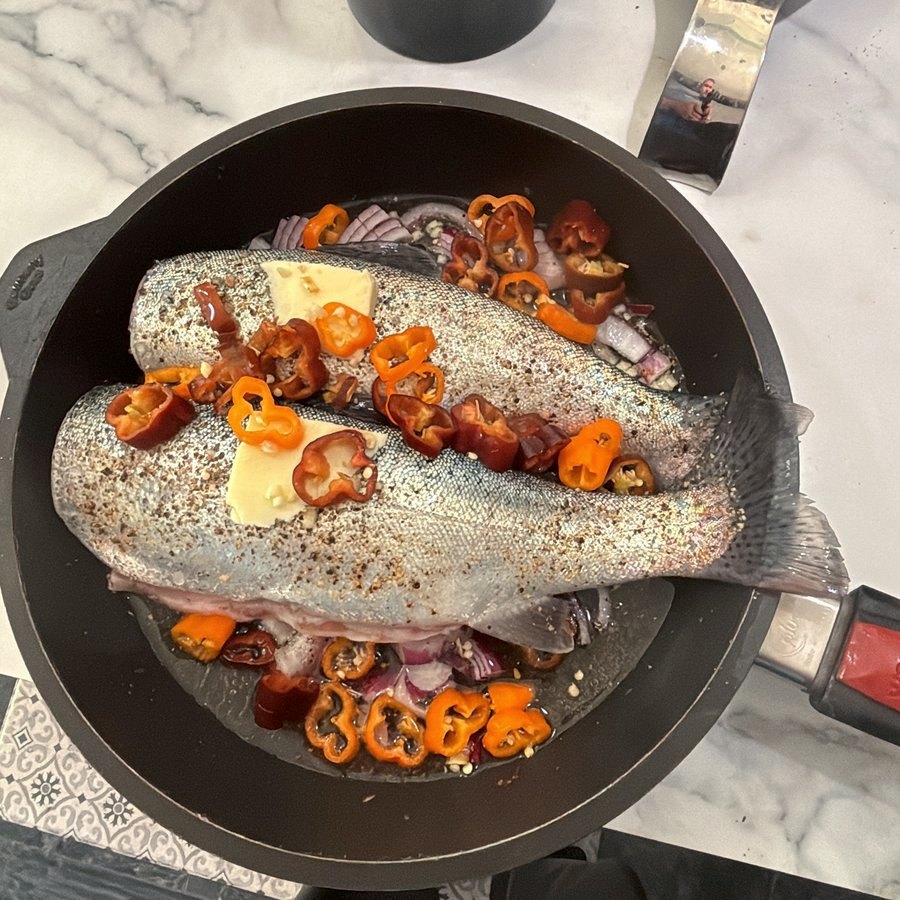
Two whole trout in a cast-iron pan with butter and sliced peppers
Pan-fried whole trout

Words you'll hear

Glossary

Adipose fin
The small fleshy fin on the back, between the dorsal fin and the tail. Trout, char and salmon have one; most other fish don't.
Char
A close cousin of the trout with light spots on a dark body. Brook trout are char.
Circle hook
A hook curved back on itself so it catches the corner of the mouth rather than being swallowed.
Fingerling
A young trout, roughly finger-sized: the size fish are usually raised to before stocking.
Lateral line
The row of sensory pores along a fish's side that detects vibration and pressure in the water.
Priest
A small, weighted club for dispatching a kept fish quickly and humanely.
Scuds
Tiny freshwater shrimp, a favourite trout food and one source of the pink colour in their flesh.
Slime coat
The protective mucus layer on a fish's skin. Wet hands help keep it intact.
Vermiculation
Worm-like, maze-pattern markings, like those on a tiger trout or a brook trout's back.